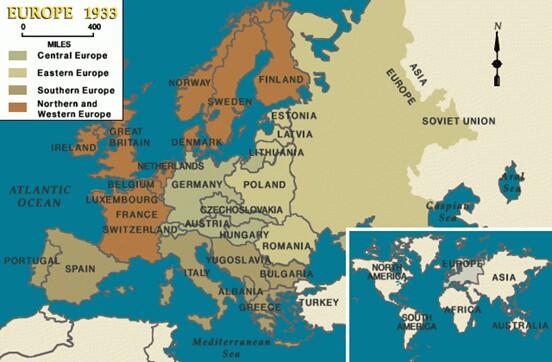
Map Europe 1933.jpg
US Holocaust Memorial Museum
An official website of the State of Georgia.
The .gov means it’s official.
Local, state, and federal government websites often end in .gov. State of Georgia government websites and email systems use “georgia.gov” or “ga.gov” at the end of the address. Before sharing sensitive or personal information, make sure you’re on an official state website.
Still not sure?
Call 1-800-GEORGIA to verify that a website is an official website of the State of Georgia.
SS5H4 Explain America's Involvement in WWII
_______________________________________________________________________________________________
b. Describe major events in the war in both Europe and the Pacific; include Pearl Harbor, Iwo Jima, D-Day, VE and VJ Days, and the Holocaust.
_______________________________________________________________________________________________
This lesson helps students to define the Holocaust, through the stories of individuals whose lives were affected by the Holocaust. Students will learn about people throughout Europe whose lives were impacted by the Holocaust.
Put this definition of the Holocaust on the board or give students copies:
The Holocaust was the state-sponsored, systematic persecution and annihilation of European Jewry by Nazi Germany, its allies and collaborators, between 1933 and 1945. Jews were the primary victims - six million were murdered.
Roma (Gypsies), physically and mentally disabled people and Poles were also targeted for destruction or decimation for racial, ethnic, or national reasons. Millions more, including the LGBTQ community, Jehovah's Witnesses, Soviet prisoners of war, and political opponents also suffered grievous oppression and death under Nazi tyranny.
By 1945, the Germans and their allies and collaborators killed nearly two out of every three European Jews as part of the "Final Solution." The "Final Solution" was the Nazi policy to murder the Jews of Europe.
Source: US Holocaust Memorial Museum Holocaust Encyclopedia: Introduction to the Holocaust
Ask students to identify what they believe are important terms and/or ideas, in each of the 3 paragraphs. Then ask them what they think these words mean.
Systematic Done or acting according to a fixed plan or system; methodical.
State sponsored Actions organized by the civil government of a country
Persecution To harass or punish in a manner designed to injure, hurt or remove rights; grieve, or afflict
Collaboration To work with another person or group in order to achieve or do something German authorities required the assistance of local people in the regions they occupied to implement the "Final Solution." These collabora- tors helped to commit some of the worst crimes of the Holocaust era.
ID CARD ACTIVITY Put cards on our website, to be downloaded, or provide a request form on our website – we would send the materials to teachers upon request.
During the Holocaust, people, organizations and governments made choices. These choices were motivated by many things, like beliefs, greed, fear, opportunity. Depending on the circumstances, people’s behavior could fit into different categories.
Perpetrators They were responsible for the Holocaust. They violated civil and human rights.
Collaborators They helped the Nazis carry out their plans. They chose to assist the Nazis.
Targets They were targeted for destruction by the Nazis for racial, political or social reasons.
Rescuers They chose to help the targets, sometimes risking their own lives.
Resisters They could resist using weapons or sometimes maintaining their humanity in terrible circumstances.
Bystanders They were witnesses to the Holocaust. They remained silent, choosing not to get involved
There were millions of people involved in the Holocaust. The Holocaust took place in countries throughout Europe.
These cards represent stories of people impacted by the Holocaust. These people actually existed and some are still alive today.
Think about the choices the person made or the choices the people around them made when reading their card.
Consider in which category the person on their card might be placed.
Ask students to read their cards silently and look at the map on the back.
Assist students with unfamiliar vocabulary (Glossary available).
Stand if you have a card which tells the story of:
Sit down if the person on your card did not survive. Students sit down after each question.
What conclusions can you draw about the target groups?
What conclusions can you draw about rescuers and resisters?
What happened to rescuers and resisters?
Stand if the person on your card was from each place I list. Then answer the following questions:
What year did life change for the person on your card?
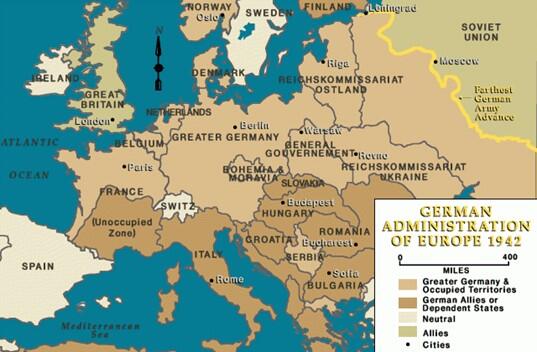
Have students locate the country the person on their card came from. Did the person on your card survive?
Czechoslovakia
How does the story on your card fit into the definition of the Holocaust?